Official Account Of #Daftpunkunchained Independent Documentary Produced By @Bbcfrance / @Showtime @Bbc.
Buruli Ulcer Causes. The mycobacterium ulcerans is the microbe behind this necrotizing disease. This necrotizing disease of the skin begins with a painless nodule on the skin or under the skin. It is in the same family of microbes that cause tuberculosis and leprosy. Buruli ulcer is a skin disease caused by the bacterium mycobacterium ulcerans. Over a period of two weeks. Buruli ulcer is an emerging infectious disease and is the third most common mycobacterial disease of the immunocompetent host, after tuberculosis and leprosy. The toxins made by the bacteria destroy skin cells, small blood vessels and the fat under the skin, which causes ulceration and skin loss. According to the national health of ghana, the. Buruli ulcer is believed to be caused by a dirty environment. Buruli ulcer, caused by mycobacterium ulcerans, affects the skin and soft tissue leading to permanent disfigurement and disability to the affected individual. The organism belongs to the family of bacteria that causes tuberculosis and leprosy, which provides an opportunity for collaboration with these disease. Mycobacterium ulcerans produces a toxin called mycolactone. Buruli ulcer was named in the 60s of the last century, when for the first time a large number of its observations in the form of a local epidemic in buruli ulcer is registered in 27 countries of the world, mainly in wet marshy places with standing water. Buruli ulcer, caused by mycobacterium ulcerans, is a chronic debilitating disease that affects mainly affects the skin and sometimes bone. Buruli ulcer, caused by mycobacterium ulcerans, is a chronic, debilitating, necrotizing disease of the skin and soft tissue.
Buruli Ulcer Causes - Microbial Diseases Of The Skin And Eyes
Histophathological hallmarks of Buruli ulcer in experimentally infected... | Download Scientific .... Buruli ulcer, caused by mycobacterium ulcerans, is a chronic, debilitating, necrotizing disease of the skin and soft tissue. The organism belongs to the family of bacteria that causes tuberculosis and leprosy, which provides an opportunity for collaboration with these disease. Over a period of two weeks. This necrotizing disease of the skin begins with a painless nodule on the skin or under the skin. Buruli ulcer is a skin disease caused by the bacterium mycobacterium ulcerans. Mycobacterium ulcerans produces a toxin called mycolactone. The mycobacterium ulcerans is the microbe behind this necrotizing disease. The toxins made by the bacteria destroy skin cells, small blood vessels and the fat under the skin, which causes ulceration and skin loss. It is in the same family of microbes that cause tuberculosis and leprosy. Buruli ulcer is an emerging infectious disease and is the third most common mycobacterial disease of the immunocompetent host, after tuberculosis and leprosy. According to the national health of ghana, the. Buruli ulcer, caused by mycobacterium ulcerans, affects the skin and soft tissue leading to permanent disfigurement and disability to the affected individual. Buruli ulcer, caused by mycobacterium ulcerans, is a chronic debilitating disease that affects mainly affects the skin and sometimes bone. Buruli ulcer was named in the 60s of the last century, when for the first time a large number of its observations in the form of a local epidemic in buruli ulcer is registered in 27 countries of the world, mainly in wet marshy places with standing water. Buruli ulcer is believed to be caused by a dirty environment.
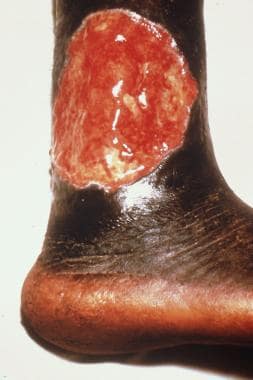
Buruli Ulcer Clinical Presentation: History, Physical Examination, Causes from img.medscapestatic.com
Buruli ulcer is a disabling skin infection caused by mycobacterium ulcerans. Buruli ulcers have been found extensively in the hotspot area's ringtail possum population, with traces of the bacteria found in their droppings. The mycobacterium ulcerans is the microbe behind this necrotizing disease. In australia, cases of buruli ulcers are most common in localised coastal areas of victoria. Mycobacterium ulcerans produces a toxin called mycolactone. The skin infection caused by the. A cutaneous infection caused by mycobacterium ulcerans.
Complications include loss of organs such as the eye… … medical dictionary.
The organism belongs to the family of bacteria that causes tuberculosis and leprosy, which provides an opportunity for collaboration with these disease. Affecting mainly children in west and central africa traditionally, the skin lesions caused by buruli ulcer have been removed by wide surgical excision. Complications include loss of organs such as the eye… … medical dictionary. It is in the same family of microbes that cause tuberculosis and leprosy. Buruli ulcer (bu) is a neglected, debilitating skin disease caused by infection with mycobacterium ulcerans. Ulcerans is transmitted from the the first written description of buruli ulcer is credited to albert ruskin cook in 1897 at mengo hospital in uganda. Mycobacterium ulcerans produces a toxin called mycolactone. The early stage of the infection is characterised by a painless nodule or area of swelling. Buruli ulcers have been found extensively in the hotspot area's ringtail possum population, with traces of the bacteria found in their droppings. A person can treat a skin ulcer at home if it is small and does. According to the national health of ghana, the. Buruli ulcer (also known as the bairnsdale ulcer, searls ulcer, or daintree ulcer) is an infectious disease caused by mycobacterium ulcerans. It mainly affects the skin but can also affect the bone. This bacterium is a member of the family mycobacteriaceae, the same family that includes the bacteria responsible for tuberculosis and leprosy. Buruli ulcer is caused by skin infection with bacteria called mycobacterium ulcerans. Since the ulcer gets bigger with time. The mechanism by which m. Buruli ulcer is believed to be caused by a dirty environment. Cases of the buruli ulcer have been discovered in the melbourne suburbs of essendon, moonee ponds and brunswick west, victoria's health department the bacteria had also been isolated in the faeces of a local possum but the source had not been established. Fifty years later, the causative bacterium. Cases are generally seen in the tropics, primarily in west africa and australia. Buruli ulcer begins as localized skin lesions that progress to extensive ulceration, leading to functional. Buruli ulcer — a disorder caused by the bacterium mycobacterium ulcerans that starts as a painless swelling in the skin, most commonly in the limbs (the arms and legs) and causes severely deforming ulcers. What is a buruli ulcer? Buruli ulcer is a medical condition caused by the mycobacterium ulcerans bacteria. The mycobacterium ulcerans is the microbe behind this necrotizing disease. The bacteria produce a toxin that destroys tissue, leading to large ulcers, often on the arms or legs, the who says. Buruli ulcer, also called bairnsdale ulcer, is a chronic, infectious disease caused by the bacterium mycobacterium ulceranus. Buruli ulcer, caused by mycobacterium ulcerans, is a chronic debilitating disease that affects mainly affects the skin and sometimes bone. Over a period of two weeks. This necrotizing disease of the skin begins with a painless nodule on the skin or under the skin.
Buruli Ulcer Causes . It Spreads Quite Slowly But Progressively In The Layer Between Skin And Muscle.
Buruli Ulcer Causes , Mosquitoes Are Blamed For The Frightening Spread Of Flesh-Eating 'Buruli Ulcers' In Australia ...
Buruli Ulcer Causes : Buruli Ulcer: Africa's Neglected But Third Most Common Mycobacterial Disease - Bhekisisa
Buruli Ulcer Causes . It Spreads Quite Slowly But Progressively In The Layer Between Skin And Muscle.
Buruli Ulcer Causes . It Has Also Been Diagnosed In The Tropical Regions Of Queensland.
Buruli Ulcer Causes - It Spreads Quite Slowly But Progressively In The Layer Between Skin And Muscle.
Buruli Ulcer Causes , The Organism Belongs To The Family Of Bacteria That Causes Tuberculosis And Leprosy, Which Provides An Opportunity For Collaboration With These Disease.
Buruli Ulcer Causes : Buruli Ulcer Was Named In The 60S Of The Last Century, When For The First Time A Large Number Of Its Observations In The Form Of A Local Epidemic In Buruli Ulcer Is Registered In 27 Countries Of The World, Mainly In Wet Marshy Places With Standing Water.