Official Account Of #Daftpunkunchained Independent Documentary Produced By @Bbcfrance / @Showtime @Bbc.
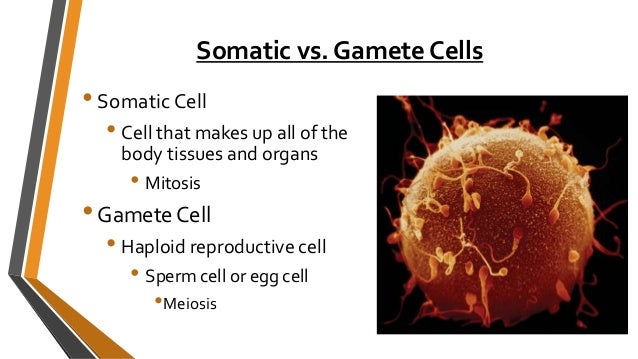
Gametes Cells. Somatic cells are a regular type of body cell that is not involved in any way in sexual reproduction. Any form of life on earth, as well as human beings, is made up of cells. There are two types of. They are diploid, meaning they have a full set of chromosomes, and replicate through mitosis for the body to repair damaged tissue and grow. These are formed by the process of meiosis, which can turn a diploid cell into four haploid gametes. Learn about gametes cells with free interactive flashcards. Cell comes from the latin cella which means a small room and was first discovered by the biologist named robert hooke. Somatic cells are basically every cell in the body besides the gametes. In females, they are referred to as egg cells. Choose from 178 different sets of flashcards about gametes cells on quizlet. Somatic cells consist of diploid (2n) genome while gametes consist of a haploid (n) genome. On the other hand, gametes are present only in reproductive organs. A cell is the basic building block of any kind of living organism. Much like male gametes, gametes in females are haploid cells. Reproduction is one of the main characteristics of a therefore, somatic cells are present all over the body.
Gametes Cells : How Does Meiosis Produce Haploid Gametes? - Quora
Formation of New Species | Biology I. Somatic cells are basically every cell in the body besides the gametes. There are two types of. A cell is the basic building block of any kind of living organism. On the other hand, gametes are present only in reproductive organs. They are diploid, meaning they have a full set of chromosomes, and replicate through mitosis for the body to repair damaged tissue and grow. In females, they are referred to as egg cells. These are formed by the process of meiosis, which can turn a diploid cell into four haploid gametes. Cell comes from the latin cella which means a small room and was first discovered by the biologist named robert hooke. Somatic cells are a regular type of body cell that is not involved in any way in sexual reproduction. Choose from 178 different sets of flashcards about gametes cells on quizlet. Reproduction is one of the main characteristics of a therefore, somatic cells are present all over the body. Somatic cells consist of diploid (2n) genome while gametes consist of a haploid (n) genome. Learn about gametes cells with free interactive flashcards. Any form of life on earth, as well as human beings, is made up of cells. Much like male gametes, gametes in females are haploid cells.
Genetics Notes from image.slidesharecdn.com
However, obtaining gametes (already differentiated cells) from these induced pluripotent cells requires one more step. Cell comes from the latin cella which means a small room and was first discovered by the biologist named robert hooke. The cells usually have one half as many chromosomes in their nuclei as the majority of body cells, which are known as somatic cells. What is a somatic cell? This leads to haploidy of the gametes and also generates genetic differences between individuals. A cell is the basic building block of any kind of living organism. In flowering plants, the gonads are found in the flowers.
Zygote is a diploid cell formed when two gamete cells are joined by means of sexual reproduction.
Somatic cells are basically every cell in the body besides the gametes. Gamete, sex, or reproductive, cell containing only one set of dissimilar chromosomes, or half the genetic material necessary to form a complete organism (i.e., haploid). Gametes are produced through the process of meiosis, which separates the. Gametic cell synonyms, gametic cell pronunciation, gametic cell translation, english dictionary definition of gametic cell. They hope to obtain gametes from fibroblasts, which are skin cells. Gametes only have one copy of each chromosome so instead of 46 they only. Somatic cells are generally diploid having two sets of chromosome , represented by n while gametes which are produced after meiosis ( reductional gametes have the haploid number of chromosomes as the one gamete is able to fuse with another one to form a diploid cell which is the zygote. However, obtaining gametes (already differentiated cells) from these induced pluripotent cells requires one more step. Contents 1 formation and development of zygotes 2 ploidy 3 c. A cell is the basic building block of any kind of living organism. • processes in spermatogenesis and oogenesis result in different numbers of gametes with different amounts. Reproduction is one of the main characteristics of a therefore, somatic cells are present all over the body. If you set up an organsim with a gamate. These are formed by the process of meiosis, which can turn a diploid cell into four haploid gametes. Mutations in somatic cells are not inheritable. On the other hand, gametes are present only in reproductive organs. Let's see how the dna number is maintained in sexual reproduction.more free lessons & practice. To create a new organism, a cell inside the organism has to divide. These cells (oogonia) undergo cell growth until they are large enough to undergo meiosis (becoming primary oocytes). Gametes are haploid reproductive cells in sexually reproducing organisms that fuse with one another during fertilization. Fertilization produces a diploid cell that undergoes repeated rounds of cell division to produce a new individual. Germ eells are the only cells in the body to undergo meiotic cell divisions during their differentiation. The primary oocytes begin meiosis but are arrested in understanding: They are diploid, meaning they have a full set of chromosomes, and replicate through mitosis for the body to repair damaged tissue and grow. Free learning resources for students covering all major areas of biology. There are two types of. This relies on the processes of cell division and differentiation. Zygote is a diploid cell formed when two gamete cells are joined by means of sexual reproduction. Any form of life on earth, as well as human beings, is made up of cells. A gamete is a haploid cell that fuses with another haploid cell during fertilization in organisms that sexually reproduce and possess only one set of dissimilar chromosomes. Somatic cells are any cells of the body which have 2n chromosomes, also know as being diploid.
Gametes Cells - Somatic Cells Are Basically Every Cell In The Body Besides The Gametes.